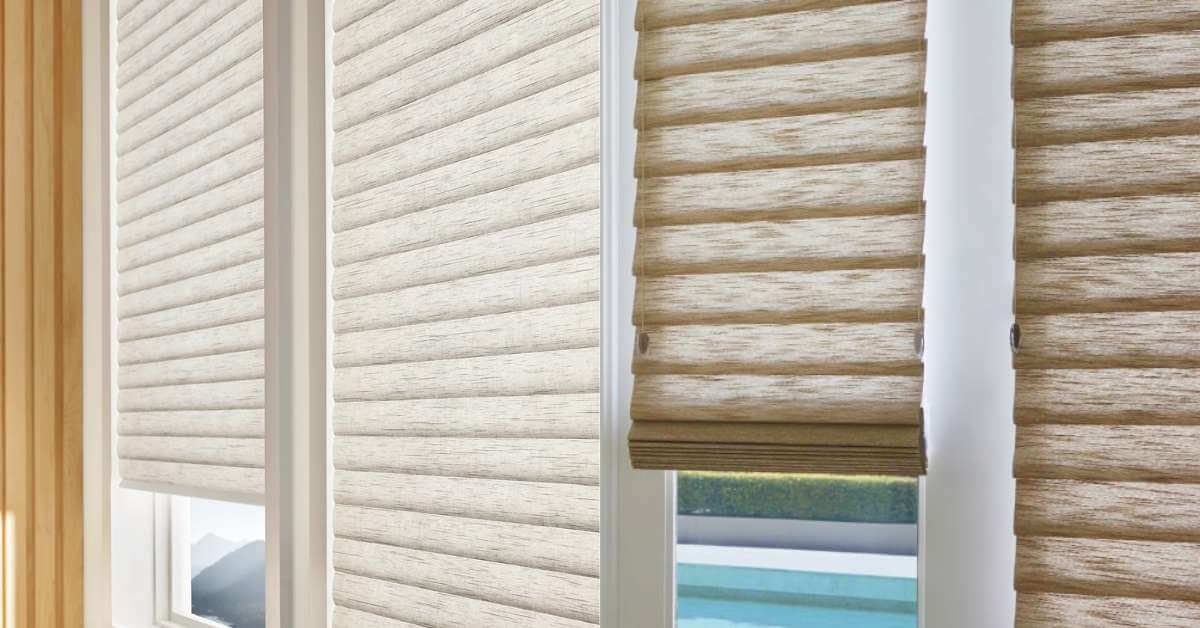
Cellular shades are generally better for insulation and indoor comfort, while roller shades are ideal for homeowners who prefer a streamlined appearance and straightforward light control. Both offer privacy and customizable fabrics, but their construction makes a difference in how they perform.
Comparing roller shades vs. cellular shades can help you choose the right window treatment for your home’s style, budget, and everyday needs.

Understanding Roller Shades and Cellular Shades
What Are Roller Shades?
Roller shades feature a single piece of fabric that rolls around a tube positioned above the window. Their simple design creates a clean appearance that complements modern and minimalist interiors.
Available in various colors and fabric opacities, roller shades allow homeowners to manage sunlight without adding visual bulk. They are also practical for rooms where easy operation and maintenance matter.

What Are Cellular Shades?
Cellular shades, also called honeycomb shades, feature fabric cells that form insulating air pockets. This construction can help reduce heat transfer through windows, especially when the shade is well fitted and used consistently.
Their soft pleated appearance works with contemporary and traditional interiors. Cellular shades also come in different cell sizes and fabric options to accommodate various light-control preferences.

Roller Shades vs. Cellular Shades: Key Differences
Both window treatments provide practical benefits, but understanding their differences makes it easier to identify which suits your home.
Feature | Roller Shades | Cellular Shades |
Appearance | Sleek and minimalist | Soft and textured |
Insulation | Limited, depending on fabric | Better insulation from air pockets, strongest in double-cell designs |
Light control | Sheer to blackout with dual-fabric options on some systems | Sheer to blackout, with top-down/bottom-up on select models |
Privacy | Depends on fabric opacity | Depends on fabric opacity |
Maintenance | Generally easy to wipe or dust | Requires gentle cleaning |
Cost | Typically more affordable | Generally higher upfront cost |
Best suited for | Modern style and simplicity | Comfort and insulation |
1. Energy Efficiency and Insulation
Cellular shades generally have an advantage in insulation. Their honeycomb structure traps air within the fabric, creating a barrier that can help limit heat transfer through windows.
This makes them worth considering for rooms that experience strong afternoon sunlight or noticeable temperature fluctuations.
Roller shades primarily manage incoming sunlight. Certain fabrics may help reduce solar heat gain, but standard roller shades typically provide less insulation than cellular designs.

2. Light Control and Privacy
Both shade types offer light-filtering and room-darkening options, including blackout fabrics for bedrooms and media rooms.
Roller shades provide flexible fabric choices. Light-filtering materials soften incoming sunlight, while opaque fabrics increase privacy. Some systems also combine two fabrics for greater flexibility.
Cellular shades provide similar opacity choices. Select models feature top-down/bottom-up operation, allowing homeowners to admit daylight from above while keeping the lower portion of the window covered.
For either product, actual room darkening depends on fabric selection and installation. Small gaps around the edges may still allow light inside.

3. Style and Interior Design
Roller shades suit homeowners who prefer uncluttered windows. Their flat fabric surface complements contemporary furniture and minimalist spaces.
Cellular shades introduce subtle texture through their pleated construction. This softer appearance works particularly well in bedrooms and comfortable living spaces.
Both come in different colors and finishes, making it possible to coordinate them with existing decor.
4. Durability and Maintenance
Roller shades are generally straightforward to maintain. Depending on the fabric, routine dusting or gentle spot cleaning may be sufficient.
Cellular shades require more careful handling because dust can collect within the pleats. A soft brush attachment on a vacuum can help maintain their appearance.
Neither product is automatically more durable. Fabric quality, operating mechanisms, and regular maintenance all influence longevity.

5. Operation and Installation
Both roller and cellular shades are available with cordless and motorized operating systems, depending on the selected product.
Motorization can make everyday adjustments more convenient, especially for tall or difficult-to-reach windows. Certain systems also support remote or smart-home controls.
Both shade styles may accommodate inside or outside mounting. Proper measurements are essential for a secure fit and effective light management.

6. Cost and Long-Term Value
Roller shades are often the more budget-friendly option, particularly with standard fabrics and basic operating systems.
Cellular shades typically cost more because of their specialized construction. However, their insulating design may help reduce heating or cooling demands depending on window conditions and household usage.
Final pricing for either style depends on window dimensions, fabric selection, and operating features.

Which Shades Work Best for Different Rooms?
Your room’s purpose can help narrow the decision.
- Living Rooms: Roller shades create a clean appearance, while cellular shades add softness and insulation.
- Bedrooms: Both offer room-darkening fabrics. Cellular shades may provide additional thermal comfort.
- Home Offices: Light-filtering roller shades can help manage screen glare. Cellular shades are useful when temperature control is also a concern.
- Large Windows: Roller shades often suit wide openings because systems may offer larger widths, split configurations, or coupled shades. Cellular shades can also work when within product size and weight limits.
What’s Right for Your Home in Ontario, CA?
For homeowners in Ontario, CA, where summer heat can make sunny rooms uncomfortable, cellular shades are worth considering for their insulating construction. Roller shades remain an appealing alternative when simple operation and contemporary styling are priorities. Both are practical options for improving privacy and everyday comfort.
Frequently Asked Questions (FAQs) About Cellular Shades and Roller Shades
Cellular shades may provide some sound absorption because of their honeycomb structure. However, the level of noise reduction varies by product and installation. They should not be considered a replacement for soundproof windows.
Both roller and cellular shades can help limit UV exposure, depending on the selected fabric. UV protection is not determined by shade construction alone, so check the manufacturer’s fabric specifications before purchasing.
Yes. Both can work on French doors when the selected product provides sufficient clearance for handles and door movement. Proper sizing and mounting hardware are important for everyday operation.
Not necessarily. Both can use blackout fabrics, but light leakage around the edges depends on the mounting method and window fit. Neither style guarantees complete darkness without appropriate installation details.
Double-cell shades have two layers of air pockets, which generally gives them better insulation than single-cell designs. They typically cost more, so they make the most sense for windows with strong sun or noticeable temperature swings.
Find the Right Window Shades for Your Home
Choosing between roller shades and cellular shades depends on what matters most. Roller shades provide simplicity and a contemporary appearance, while cellular shades offer added insulation and a softer finish.
For homeowners in Ontario, CA, and throughout San Bernardino County, Excellent Blinds & Shutters provides custom window treatment solutions tailored to your space. Our expert team helps homeowners compare shade fabrics and operating options to find the right balance of comfort and privacy. Schedule your free in-home consultation with us today and get professional guidance on choosing custom roller or cellular shades that fit your windows and lifestyle.